Outcomes : Analyses interactions between components and processes within biological systems SC5-14LW
Content: LW2 Conserving and maintaining the quality and sustainability of the environment requires scientific understanding of interactions within, the cycling of matter and the flow of energy through ecosystems.
Students: a. Recall that ecosystems consist of communities of interdependent organisms and abiotic components of the environment (ACSSU176) c. Describe how energy flows through ecosystems, including input and output through food webs (ACSSU176)
Task: Students will be learning about different types of ecosystems, where they will analyse the interactions between components and processes within biological systems. This task will require independent research skills as well as the immersion into the VR app Google expeditions. Students will then present their findings to the class.
Instructions:
- Please organise yourself into groups of three somewhere spacious in the classroom
- One individual from each group please approach the front of the class where you will: Grab three Google cardboard VR kits and take a lucky dip into the green hat, grabbing only ONE piece of paper (this will determine the ecosystem your group will be focusing on).
- Please open Google expeditions app on your phones and in the search bar type ‘ecosystem’. Press on the ‘ecosystem’ VR site.
- Once you are in the site, press ‘view in VR’, and find your group’s ecosystem.
- Place your phone into your Google cardboard kit and explore your ecosystem (if you have an difficulty, please ask for help).
- As you are exploring in the VR world, keep in mind the questions you must answer (These questions come from the tour on the VR app + additional questions by me) Please use the internet when needed .
- You will be given 20 minutes to do this.
- Following this, for 15 minutes of class, each group will stand up, taking the role of the teacher, where you will educate the class on your ecosystem, summarising everything you have learnt. This will enable the coming together of information and understanding of concepts as a whole.
- The summarisation must be done in an IMMERSIVE and CREATIVE manner (Q&A, mind maps, flowcharts, VR etc.) –> Time restriction of 2 minutes each group .
- Remaining class time we will put all of this together and discuss about the flow of energy and food webs.
*Groups who finish their task early may explore other ecosystems sites on google expeditions such as; Ecosystems of Borneo, Survival in Extreme Ecosystems, Exotic Marine Systems, A Journey Along the Great Barrier Reef.
Enjoy the virtual reality experience!
Find your corresponding ecosystem questions below.
FOREST:
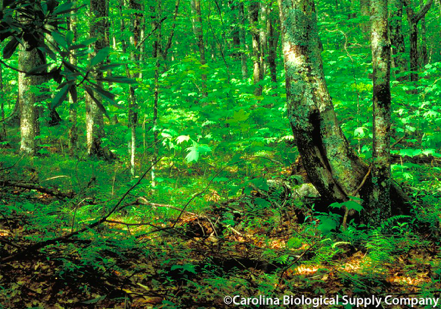
· What is a forest?
· What is an abiotic component when referring to ecosystems?
· How would soil erosion affect an ecosystem?
https://search.creativecommons.org/photos/92a94fdf-5530-43ca-9d57-da0e26f2af2b
WETLANDS:

· What is a wetland
– Why are wetlands important?
· What are producers?
· How do producers interact with the abiotic components of an ecosystem?
https://search.creativecommons.org/photos/9cad4c7f-380d-40d6-9290-30dc87d2ed21
TUNDRA:
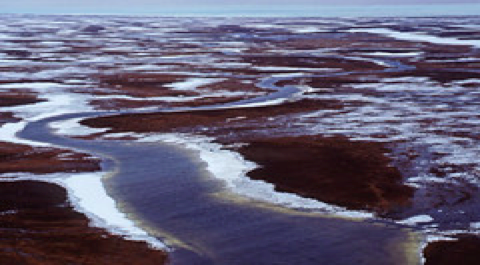
· What are consumers?
· What is the difference between a carnivore and an omnivore?
· Why is the sun critical to all life on earth?
https://search.creativecommons.org/photos/355db5cc-9384-4163-a354-8881f9e35a36
MARINE:

· What is the common feature across all marine ecosystems?
· What role do decomposers play within an ecosystem?
· How do decomposers interact with abiotic components of the ecosystem?
https://search.creativecommons.org/photos/cae3e592-c08e-438e-a9a7-c80d61afdea7
DESERT:

· What did the Sahara desert region look like 12,000 years ago?
· What are some of the drivers that can change one type of ecosystem into another?
· What are the implications of rapid, human-induced climate change?
https://search.creativecommons.org/photos/008b065d-2219-46ce-afbe-b9acb495d26f
URBAN:

· What is an urban ecosystem?
· What is a large difference between the species of producers found in a natural ecosystem compared to an urban ecosystem?
· Why are urban environments considered ecosystems?
· What happened 10,000 years ago that rapidly changed many ecosystem around the world?
https://search.creativecommons.org/photos/34197aed-c1da-427d-9e32-84271273cafb
MICROECOSYSTEM:

· What is a microecosystem?
· Why are phytoplankton important to the larger marine ecosystems?
· What is the difference between a microecosystem and an ecosystem?
https://search.creativecommons.org/photos/7335be63-dcf4-4963-87c2-3ac0ae7a8466
Feedback: student self and peer-assessment will take place during presentations, this is where positive feedback from other students can occur, as well as direct teacher observations.
 Ecosystems